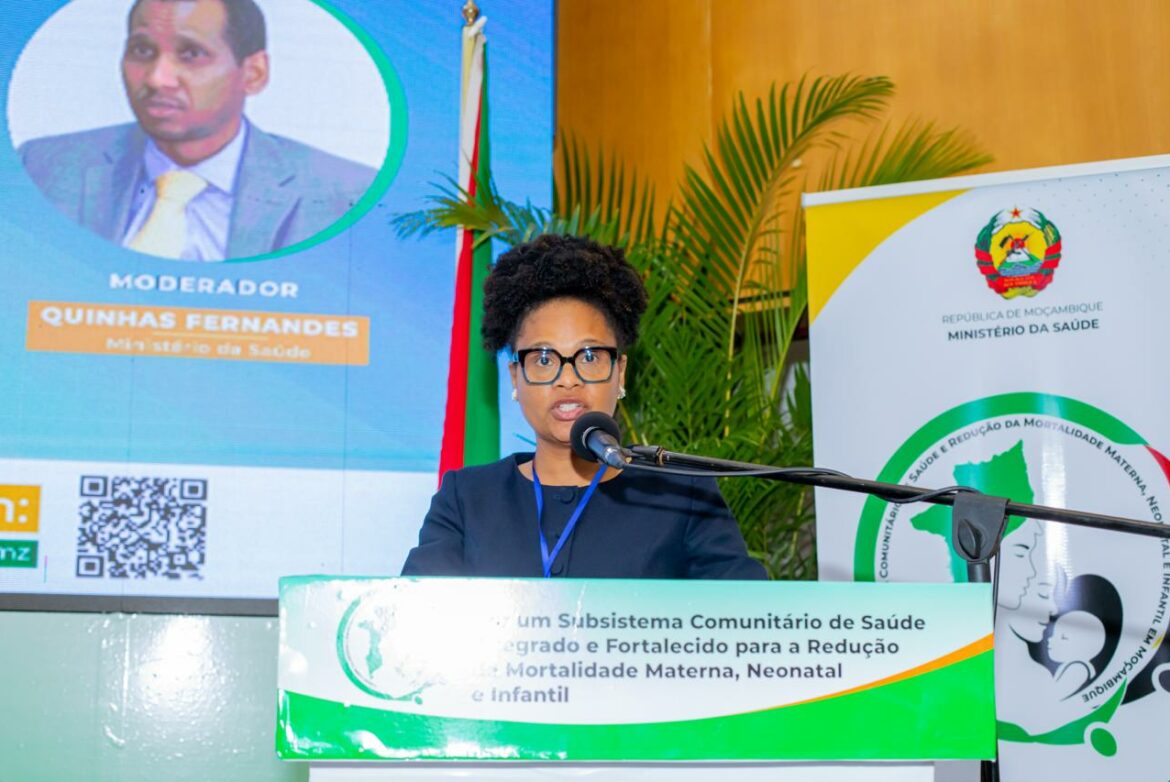
The Deputy National Director of Public Health, Aleny Couto, advocates for the strengthening of primary health care (PHC) in the country, noting that the progress made has not yet met the needs. This stance was presented during a session in which Couto discussed the advances, gaps, and prospects of primary health care.
“At all levels, we've had an increase in human resources, from medical technicians, doctors, general nurses, as well as our maternal and child health nurses, which is the minimum and basic team we should have at the primary healthcare level,” he indicated.
To support her statement, the leader cited the example of multipurpose health workers, who numbered 3,642 in 2017 and are around 10,000 today.
In addition to human resources, Couto highlighted the sector’s progress based on other indicators, such as the healthcare network, which grew from 1,769 healthcare facilities in 2021 to 1,916 in 2025, representing an 8% increase.
Following the same path, she spoke about maternal, neonatal, infant, and child mortality. Here, she said that the country may not be at the desired pace, but it shows significant improvements. To support her statement, she showed that from 1997 to 2022-2023, pregnancy-related deaths per 100,000 live births decreased from 690 to 233.
“Regarding infant and child mortality, we are at 60 deaths, down from 201. In relation to infant mortality, we went from 135 to 39. In neonatal mortality, we went from 54 to 24,” she shared.
The Expanded Program on Immunization was also referenced by Aleny Couto, who noted that there is a larger number of antigens, a fact that shows progress at the national level, despite the ongoing challenge of having fully vaccinated children.
Couto clarifies that, despite the important progress made, population coverage is not yet at the recommended level, so there is a lot of work ahead.
“We need to have 10,000 inhabitants per health unit, but we still have 17,618. So, we have a challenge here in our health network. We also have the challenge of accessibility, especially in rural areas, where people have to travel an average of 11 kilometers to reach a health unit,” he stated.
Still within the framework of challenges, she pointed to unequal distribution and a deficit of human resources, dependence on external funding, geographical and sociocultural barriers, service quality, and information systems, a component in which there is a lack of comprehensive data to identify specific shortcomings of Primary Health Care.
Challenges also include the limited capacity to mobilize the necessary resources and institutions to transform health systems around CSP values or principles, limited CSP management capacity at all levels, weak district health systems, and disproportionate attention on specialized hospital care.
As sector perspectives, Couto mentioned the consolidation of the community health subsystem, investment in human resources, expansion of electronic systems, operationalization of the Essential Package of Health Care, strengthening of PHC, approval of the Statute of Multipurpose Health Agents, sustainable financing, among others.
In the same context, the interlocutor emphasized that Universal Health Coverage and the sustainable reduction of maternal and child mortality depend on the provision of PHC services and the existence of a strong, integrated, and funded community health subsystem.
The aforementioned session was part of the 1st Technical-Scientific Meeting on the Community Health Subsystem, which took place recently in the city of Maputo.